





BA (Hons) Commercial Modern Music - Music Production
TU CODE: TU961
Apply NowIf you are interested in creating music and sound and want to gain a degree-level qualification, and also fulfil your creative and commercial potential, then BA (Hons) Commercial Modern Music is the right choice to help turn your passion for music into a career.
This four-year programme aims to develop your technical approaches to music and sound production while at the same time progressing your career goals, using a deadline-driven project management approach.
At BIMM Dublin, we understand that the key component for music production is bringing a student’s technical knowledge and creativity to real-world, live and studio settings. To also learn the fundamentals required to collaborate with others, work with artists, and record other musicians’ sounds.
You’ll also further hone your skills by receiving tuition in modules such as Music & Listening Skills which aims to develop critical communication and listening skills for music producers and Industry Toolkit where you will develop an understanding of the skills and knowledge needed to operate as an entrepreneur within the modern music industry. You will collaborate with both the songwriting and instrumentalist streams and will also have the opportunity to upskill in your own performance skills, through a range of optional modules, if you so wish. The degree is both academically, technologically and musically challenging, providing the perfect balance between practical and technical skills and theory and analysis.
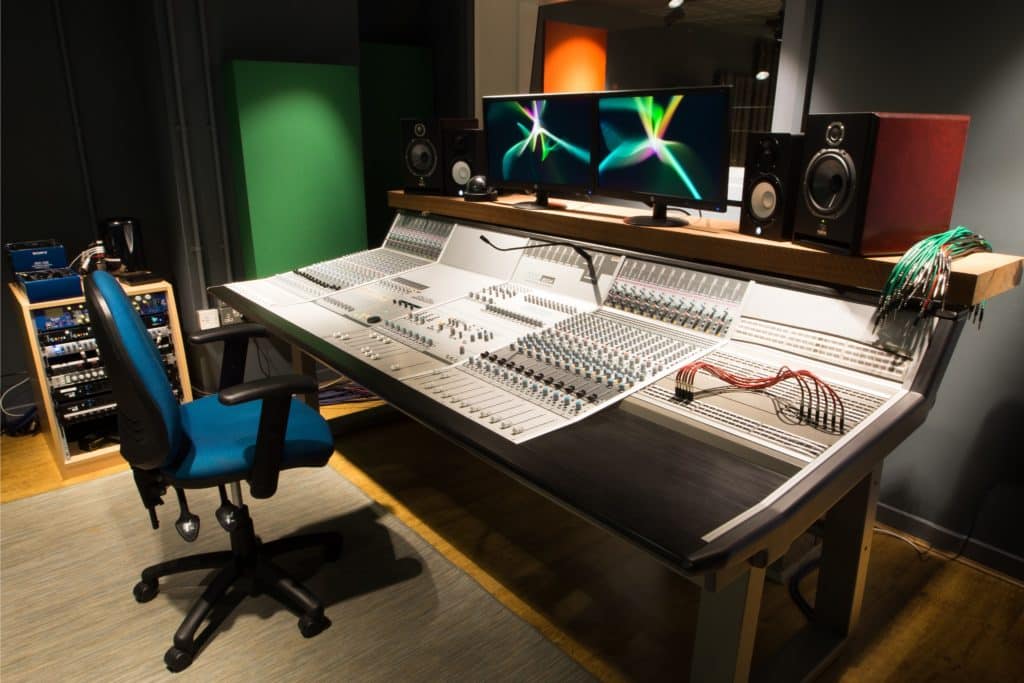
You’ll be part of a creative community of gifted writers, performers, critical thinkers and music industry professionals who you can collaborate and network with to help bring your talent to life.
Through a range of core and optional modules including (but not limited to) Live Sound Engineering, Creative Mix Techniques, Creating Sample Libraries, Digital Performance Skills, Sound Design & Writing for Media, Practical Learning & Teaching in the Creative Arts, Electroacoustic Composition, Game Sound & Music, Immersive Audio Techniques, Audio Postproduction, Interactive Music Applications, you can tailor the degree to fit your own personal goals.
Life at BIMM will stretch you as a creative, a musician and performer depending on your interests. It will also inspire you as a fan, as you attend unique Masterclasses with some of the best producers, industry professionals and musicians in the world. You’ll also have the opportunity to audition for the BIMM releases and termly BIMM gigs.
Your course will culminate in either a Professional Project utilising academic research skills or Analytical Perspectives dissertation designed to investigate your chosen stream through key concepts and theories associated with cultural studies. This will give you a head start into the workplace and enhance an appreciation and understanding of your cultural and social environment.
So, what are you waiting for? To make your way as a musician, connect with us and we’ll connect you to a life in music.
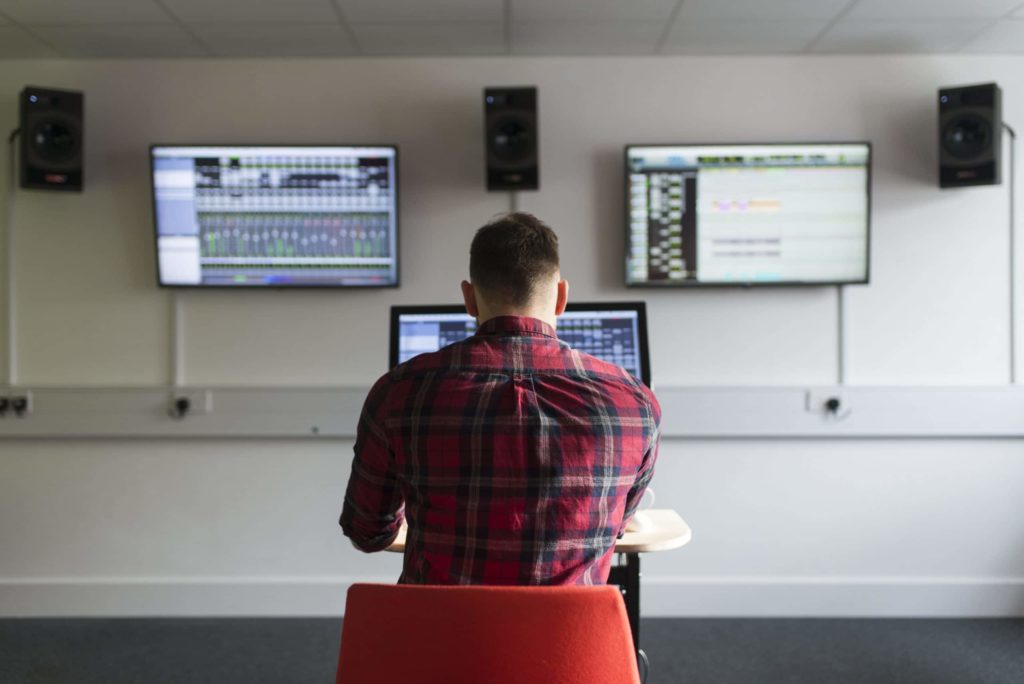
Course specification
Mode of attendance: Full-time
Length of course: Four years
Awarding institution: Technological University Dublin
Campus delivery: Dublin
TU Code: TU961
Level: 8
Language of study: English
Final award: Bachelor of Arts (Hons)
Minimum requirements
6 Leaving Certificate subjects +25s + audition*
**a minimum of 2 H5’s and 4 O6’s/H7’s are required to meet the minimum entry requirement.
Progression
Course fees
BA (Hons) in Commercial Modern Music falls under the free fees scheme. To check if you are eligible for free fees, take a look at the student finance website.
Detailed information on fees is available on the registration office at TU Dublin.
Year 1
Module names and structure may be subject to change.
The skills needed to capture a great recording are essential to any music producer or creative musician. This module will explore the fundamental principles of multitrack recording techniques covering aspects such as audio quality and microphone technique. Understanding the technical constraints imposed by a recording system can allow students to achieve the maximum results from the system. As part of the assessment programme, students will engage in collaborative recording projects, working with other students within the BIMM Community.
This module aims to provide the student with a solid grasp of the fundamentals of Music and Audio Production. Students will explore core techniques and standards within the music and creative industries and develop their ability to communicate creative and artistic ideas as well as technical specifications. Students will develop critical listening skills that are essential to all areas of Music and Audio Production.
Relevant current technologies will be used as a teaching tool, with each student having access to a workstation equipped with the industry-standard software. Students will have the opportunity to develop an awareness of industry-standard techniques and practices utilised by professionals working in the music and audio production industry. This will include considerations for sustainability, equity, diversity, and inclusion.
While recording and mixing techniques are integral parts of music producer’s skillset, musicianship and communicating musical ideas are equally important. This module introduces, integrates and explores music theory strategies within the context of contemporary music production. You will develop critical listening skills; discuss and develop musical vocabulary that encompasses both traditional western harmonic theory and modern music production terminology. You will apply these concepts to your own creative practice, alongside researching appropriate practitioners from diverse musical backgrounds. Exploiting these strategies will enhance the modern producer’s toolkit.
With the continued expansion of the global live-events sector, live sound engineering is critical to a significant portion of the music industry, offering diverse employment possibilities.
This module explores the intricacies of controlling and delivering high-quality audio production in a live setting. Students will investigate core aspects of live sound reinforcement, including front of house and monitor mixing, backline, stage planning, and advancing. Students will also work with a house band in select sessions throughout the module to apply their skills in a realistic performance context. Delivered through a combination of lectures and practical workshops using industry-standard equipment and live performances, this module offers foundational insights into professional practices and working methodologies within the live sound field.
This module aims to provide the student with a solid grasp of the fundamentals of Music and Audio Production. Students will explore core techniques and standards within the music and creative industries and develop their ability to communicate creative and artistic ideas as well as technical specification. Students will develop critical listening skills that are essential to all areas of Music and Audio Production.
This module is designed to equip students with the supplementary skills needed to support a sustainable career in the music industry, beyond the technical and stylistic training afforded by other modules. Students will develop a robust and self-reliant skillset, learning how to navigate various avenues for artistic and commercial success as artists.
Key areas of focus include building and managing your brand or ‘artist identity,’ enhancing well-being and sustainability practices, leveraging social media marketing, crafting an effective artist CV, designing impactful posters for gigs, individual negotiation of fees, and understanding global issues in the music industry and beyond. On completion of this module, students who engage fully with this module will develop a greater understanding of what is required to establish and sustain a career in the music industry, both locally and globally.
This module introduces students to the fundamentals of music theory through practical application on the piano keyboard, alongside the development of aural recognition and music notation reading. It focuses on identifying and notating harmony and rhythm in contemporary music using industry-standard notation, analysing and performing musical excerpts, and applying and evaluating music theory concepts. Students also develop essential practical musicianship skills, including pitch recognition, and learn to create and perform written pieces of music, preparing them for the BA Year Two Applied Music Theory & Keyboard Skills module.
Advances in music technology and changes in the music industry have necessitated that musicians are fluent and proficient in using creative music applications, such as the Digital Audio Workstation (DAW). This module aims to provide students with the basic skills to operate a DAW, while highlighting the importance of these skills as a music industry practitioner.
With a focus on creative musical outputs by way of arrangements and compositions, students will learn how to navigate a DAW through creative task-based learning, and will develop the necessary skills to operate a DAW, such as how to record audio from physical instruments, how to utilise software instruments, audio editing skills, and how to utilise audio samples. Adding these skills to the musician’s toolkit allows for a broader skill set for the practicing musician, necessitated by the current live and recorded music industry.
This module is designed to support BA1 students in the transition from second-level to third-level education. Students will gain essential skills in academic research, writing, referencing, and critical thinking, providing the foundational support necessary to adapt successfully to higher education standards and expectations. By mastering these foundational competencies, students will learn to articulate ideas clearly, evaluate sources critically, and structure persuasive arguments, significantly enhancing their ability to thrive academically and professionally.
A core aspect of this module involves nurturing reflective practice and critical self-awareness, empowering students to become proactive and strategic self-directed learners. Emphasis will be placed on developing time management skills, self-directed study strategies, and effective techniques for critically interpreting and integrating information from various sources —skills vital for both academic excellence and creative growth.
Through interactive lectures, practical activities, peer collaboration, and reflective exercises, students will gain the confidence and capability required to smoothly navigate the demands and complexities of third-level study, establishing a strong foundation for continuous learning and self-expression.
Year 2
Module names and structure may be subject to change.
This module offers students a practical foundation for applying key concepts introduced in the BIMM Music Business and Study Skills programme. Through a focus on real-world industry scenarios, students will explore the development of business plans and project management approaches across areas such as recording and publishing contracts, artist management, music synchronisation, music law, copyright, music education, merchandising, and touring while incorporating strategies for Equity, Diversity, and Inclusion (EDI) Additionally, the module integrates essential academic study skills equipping students with the tools required for effective learning and success in Higher Education.
Following on from BA1 Music Theory and Keyboard Skills, this module provides the student with an opportunity to consolidate, develop and apply the music theory concepts studied in BA1.
The module focuses on furthering the application of musical theory concepts applied to instruments in a classic rock band setting i.e. Bass, Drums ,Guitar and Vocals, along with a more detailed study of the music theory concepts used in music. The module will expand existing knowledge of harmony and rhythm and develop it further by introducing more sophisticated topics. Students will apply these newly learned concepts practically using keyboards.
This module will also include practical applications of theoretical concepts to better prepare the student for the range of musical situations they are likely to encounter as professional musicians.
Foley, a performance art form, is integral to the creation of immersive media soundscapes. Utilised alongside creative sound design and location recording, these integral disciplines form the basis of modern media asset production. This module will expose you to the appraisal, deployment, and evaluation of state-of-the-art techniques and tools. You will develop and explore narrative analysis from both a theoretical and practical perspective, whilst developing successful strategies for asset development within the wider media production landscape.
This module consists of three components or learning arcs undertaken by both the instrumentalist stream and the song writing stream.
The components are designed to be a continuation of key skills addressed in Year 1 and preparation for key skills required to enable the fulfilment of learning outcomes underpinning modules in Years 3 and 4.
The indicative syllabus associated with each component will inform and aid the development of a broad skill set and encourage a spirit of curiosity and a desire to learn among students.
The individual module components are:
- Cultural Theory, An Introduction
- Personal & Professional Development
- Research Methods, Academic Writing and Pedagogy, An Introduction.
This module will require you to explore the art and techniques of mixing multiple sources of audio, acoustic recorded or electronically generated / synthesised, into one cohesive sounding ‘mix’. The skills developed in this module will allow you to mix multi-track recorded compositions, multi-mic’d live performances and soundtracks for visual media.
Within this Module, you’ll be developing online components that reflects common workflows in the music production industry, approaches to project conception and management, digital and analogue productivity tools and the integration of critical listening skills, creativity and artistic mindsets in an audio project.
This module facilitates understanding of our listening environments and the interpretation of sound through the complexities of both physical and psychological influences. For successful music productions and live sound events, we require acoustically suitable environments alongside an understanding of how our brains interpret sound. You will study topics such as frequency, reverberation and standing waves. This module gives you the skills to design appropriate acoustic treatments utilising industry standard software and hardware for acoustic analysis.
This module will present the role of the modern Studio Engineer within the industry and discuss in detail the technology involved. Focus will be on teaching current engineering practices, applied to a variety of typical commercial scenarios, and understanding the relationship between technology and professional studio practice.
Year 3
All students take mandatory and optional modules in their third year of study.
Module names and structure may be subject to change.
This module assists musicians with ear training, transcription skills and notation. It discusses broad theoretical issues and introduces non-Western and ‘classical’ techniques of composition, analysis and performance.
In this module you will be required to create a bespoke, functional library of sounds regarding an identified gap in the market or for professional or personal use. The module will focus on relevant microphone techniques in relation to an end user as well as the desired library functionality.
This module covers the comprehensive history of popular music from 1900 to 1970, which analyses the social and political conditions that influenced the development of the art form, as well as evaluating key releases from influential artists.
Musicians undertake a research project that supports their planning for the Professional Project module. For example, a vocalist could research the techniques involved in getting a vocal sound in the studio, or a band musician planning a national tour could prepare a case study on a relevant breaking act or important venue.
This module will examine approaches to composing for a variety of moving image mediums. We will also examine workflow in relation to collecting original sound design assets to create realistic environments, while accommodating elements of Foley in the resulting soundscape.
You will explore technical processes such as recording, mixing, layering and blending sound design and Foley with musical compositions, and this will be combined with musical theory concepts to broaden your compositional capability.
This module will focus on all aspects of studio vocal production: from the technical approach, to coaching the best performance, to vocal arrangement, to post-production and mixing.
In this module, you will study the advanced techniques of music production and creative practice necessary to create genre specific tracks in areas of electronic music. Key genres will be compositionally analysed, such as Hip Hop, Microsound, Synth Pop, Grime, Ambient, IDM and many others.
This module addresses the need for modern music practitioners to be digitally literate and dynamic entrepreneurs, enabling them to directly engage with their target audience. Some of the areas covered include data collection, analytics, social media marketing, artist branding, direct email marketing, website design, marketing campaigns, digital music stores and benchmarking.
In this module, you will examine the various aspects of using music technology to plan, collaborate, and deliver a live performance from the studio to stage.
This module will familiarise musicians with fundamental issues in music publishing, including history of the industry, key concepts of copyright, collection societies, analysis of music publishing contracts, sub-publishing, and synchronisation.
It will encourage songwriters/musicians to apply their knowledge in real-world situations with their own material.
This module is about exploring and learning different models of synthesis and how these can be implemented into production projects. Students will examine the possibilities presented within these advanced avenues of music creation, enabling them to develop a deeper understanding of how creative intentions outside the realms of conventional music production aesthetics can be achieved.
In this module musicians will be placed in simulated, “deadline driven” recording session environments. They will be encouraged to attain an understanding of professional production values and an awareness of the responsibilities of the recording musician.
Year 4
All students take mandatory and optional modules in their third year of study.
Module names and structure may be subject to change.
This module prepares students to confront their responsibilities as creative and professional practitioners in the music industry by conceiving, managing, and delivering a professional-level music-based project rooted in real-world practice and career development. Students draw on academic theory, practice-led research, and reflective analysis to inform their professional activity, while developing robust practical, entrepreneurial, industry-related, and metacognitive skills.
Projects must be realistic, achievable, and deliver measurable outcomes, reflecting the need for adaptability, flexibility, and self-direction in a rapidly evolving industry shaped by digital technologies and AI. The module consolidates learning from Academic Study Skills (BA1), Artist Development & Entrepreneurship (BA1), Essential Development Skills (BA2), and Research Methods (BA3), enabling students to conduct thorough research, interpret findings, critically analyse outcomes, and reflect systematically on their practice to propose recommendations or models for future working practice.
This module develops students’ understanding of their own creative lineage by providing a critical overview of popular music from 1970 to the present day. Using cultural theory as a framework, students evaluate the work and significance of key artists across multiple genres, building on the skills and ideas introduced in BA3 Cultural Perspectives.
Drawing on the ideas of influential 20th- and 21st-century philosophers and theorists, the module uses seminars, independent reading, discussion, and debate to encourage critical engagement with artists’ cultural and historical contexts. Through this process, students become more culturally informed creative practitioners and demonstrate their learning by producing an extended written evaluation of an artist’s work using one or more lenses of cultural theory.
Game sound has come a long way since the bloops & bleeps of the 1980s. Gamers now expect fully immersive and interactivity to match the improvements in graphics and gameplay.
Though there’s some overlap with film and TV sound, game sound designers need a unique set of skills. Sound effects and music need to be interactive and respond to changes and events in the game.
This module will introduce you to the challenges involved and teach you how to identify and meet them.
This elective module is designed for students with a strong aptitude for Western Art Music history and theory – and offers an opportunity to deepen analytical engagement with both historical and contemporary developments in musical language. Emphasis is placed on close listening, detailed score analysis, and the critical examination of key works by major composers from a range of historical periods and artistic movements, with particular attention to the historical conditions that influenced stylistic and theoretical evolution.
Through focused study of selected compositions from key Art Music composers, students will investigate how stylistic and theoretical developments emerged in response to changing artistic, aesthetic, and formal priorities over time. The module prioritises analytical listening as a means of understanding compositional technique, structure, and the evolution of musical thought, supported by regular group discussion and critical reflection.
This module builds upon and extends the concepts introduced in DN/CMM701 ‘Advanced Music Theory and Arrangement’ and DN/CMM702 ‘Cultural Perspectives’.
This module explores the history of the Irish musical tradition, focusing on its repertoire, instrumentation, vocal and dance forms, ornamentation, and notable artists from the past to the present day.
Students examine the socio-political impact of the genre on Irish culture and the Irish diaspora, while analysing significant moments in the development of traditional Irish music and the factors that have shaped influential artists into important cultural icons.
Game sound has come a long way since the bloops & bleeps of the 1980s. Gamers now expect fully immersive and interactivity to match the improvements in graphics and gameplay. Though there’s some overlap with film and TV sound, game sound designers need a unique set of skills. Sound effects and music need to be interactive and respond to changes and events in the game. This module will introduce students to the challenges involved and teach students how to identify and meet them
This module will focus on producing music through using programming language and interactive music systems. You will examine algorithmic music concepts from pioneering artists of the past and present, explore a range of interactive techniques using a range of different software and hardware.
This module will equip students with the knowledge and skills needed to plan their career pathways within the music industry and engage effectively with industry professionals. Students will develop an understanding of key contractual agreements they may encounter throughout their careers, including those related to management, recording, publishing, and live performance.
Through the exploration of industry structures and terminology, students will learn how to interpret important contract terms and assess their potential impact on professional opportunities. By the end of the module, students will be able to make informed decisions and communicate confidently with legal and industry advisors. This module encourages critical reflection on the principles of equality, diversity, and inclusion (EDI) in music industry practice, enabling students to consider how these values influence business models, contracts, representation, and access to opportunities across different sectors.
This module offers an in-depth exploration of contemporary commercial songwriting, with a focus on the development of practical compositional skills and creative expression. Students will engage with core theoretical musical concepts such as melodic and thematic development, harmonic progression, tension and release, and lyric writing. These will be applied to the creation of four original songs, two of which will be submitted for assessment: one written to a set brief for a third-party artist, and another developed as part of the student’s own artistic repertoire. Emphasis is placed on compositional technique, genre awareness, originality, and the creative process, alongside the use of music production technology to deliver industry-standard demos.
Classes will be delivered through practical workshops, guest sessions with professional songwriters and industry experts, focused writing exercises, weekly creative tasks, and ongoing formative feedback from both lecturers and peers. This approach is designed to simulate real-world songwriting environments, support individual artistic development, and enhance collaborative and critical skills essential to commercial songwriting practice. The module also encourages reflective practice and critical self-evaluation to support artistic growth and professional development.
Contemporary electronic music ranging from Techno to Modern Classical utilises many of the cutting-edge processes developed by pioneering electroacoustic composers. This module will introduce you to electroacoustic practices, advanced software tools and compositional strategies that will develop your creative abilities in electronic music production.
Students will engage in technical and aesthetic analysis of exploratory electroacoustic sound works, which will equip them with the necessary skills to make informed interpretations and appraisals. Students will develop both practical and theoretical prowess, enabling them to create bold and challenging contemporary electroacoustic sound works.
This is an elective module aimed at students with a strong aptitude for music theory that wish to deepen their understanding of advanced theory concepts, and further develop their composition and arrangement skills through song analysis and practical application.
This module will consolidate, and develop on, the concepts covered in Advanced Music Theory and Arrangement in a project-based environment, through their application on DAWs and notational software, using sample libraries and industry-standard notation.
Any questions?
For any questions regarding our courses or if you’d like more information on how to apply to BIMM Music Institute, please contact our Admissions Team on +353 1 5133 666 or email [email protected].